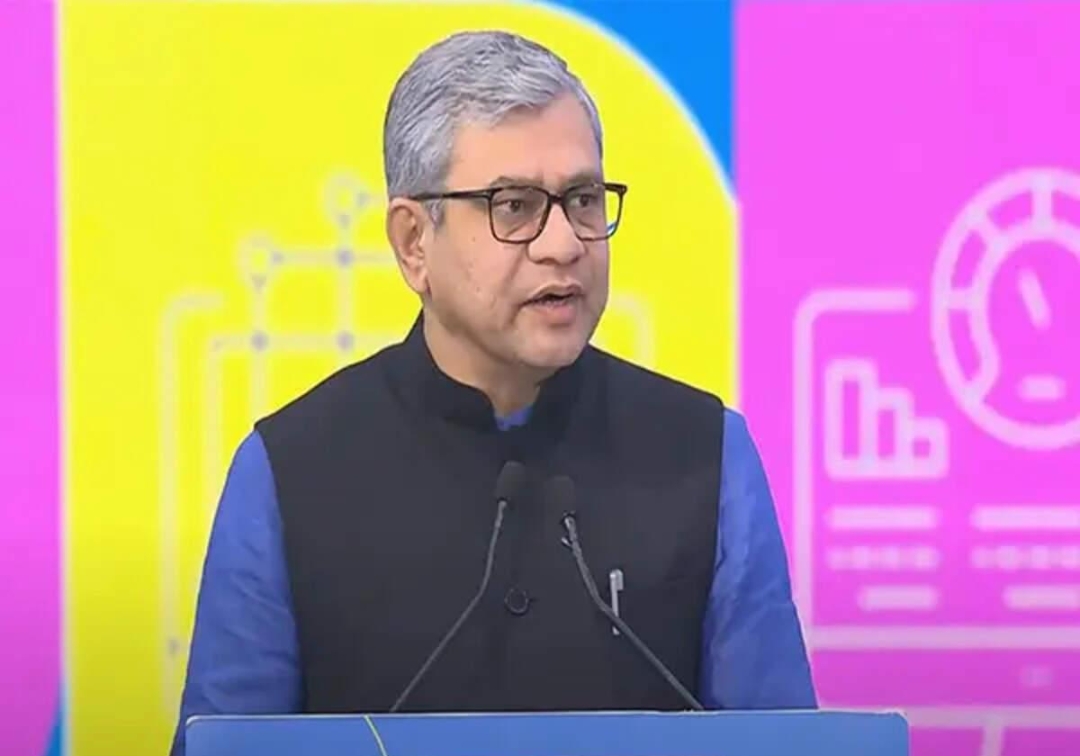


New Delhi, June 8: Union Minister for Electronics and Information Technology Ashwini Vaishnaw on Monday said India has emerged as a key global hub for semiconductor design, with some of the world’s most advanced chips, including those developed by and , now being designed in the country.
In an interview with ANI, Vaishnaw said India’s growing talent pool and expanding semiconductor ecosystem have positioned the country as a future leader in both chip design and manufacturing.
“More than 300 universities are teaching students to design chips. Two-nanometer chips are designed in India. The most advanced chips in the world, including Nvidia chips and Intel chips, are now being designed in India,” the minister said.
Highlighting India’s progress under the government’s semiconductor initiatives, Vaishnaw said the country is steadily moving towards becoming a major global semiconductor destination. He credited programmes such as the Make in India initiative and the India Semiconductor Mission for strengthening the sector and attracting international attention.
“The world today recognises India as a country that will become a major semiconductor design and manufacturing hub in the coming years,” he said.
Referring to the recently announced India Semiconductor Mission 2.0 in the Union Budget 2026-27, the minister said the next phase will focus on developing a comprehensive semiconductor ecosystem, including manufacturing equipment, specialty chemicals and industrial gases required for chip production.
He noted that semiconductor manufacturing remains highly concentrated in a few countries and India aims to build domestic capabilities in these critical areas.
“In Semicon 2.0, design will remain our top priority. We also want to focus on the machines used in semiconductor manufacturing, as well as the nearly 250 chemicals and 50 gases required in the chip-making process,” Vaishnaw said.
The minister further highlighted the growth of India’s deep-tech startup ecosystem, stating that around 40 semiconductor design startups supported under the first phase of the semiconductor mission have successfully secured venture capital funding.
Expressing confidence in India’s future prospects, Vaishnaw said the country’s proven capabilities and vast engineering talent are attracting growing global interest.
“With the kind of interest the world has in India today and the success with which the country has delivered, global participation will continue to increase significantly,” he added.
India’s semiconductor ambitions received another boost last month when released its roadmap titled Future of India’s Semiconductor Industry, outlining a strategy to position the country as an indispensable player in the global semiconductor value chain.
Semiconductors are considered vital to national security, economic resilience and technological advancement, powering sectors ranging from defence and telecommunications to artificial intelligence, healthcare and advanced manufacturing.
As global semiconductor supply chains undergo significant restructuring amid geopolitical shifts and increasing demand for trusted production capacity, India is seeking to transition from a major consumer market to a critical contributor in the global semiconductor industry.