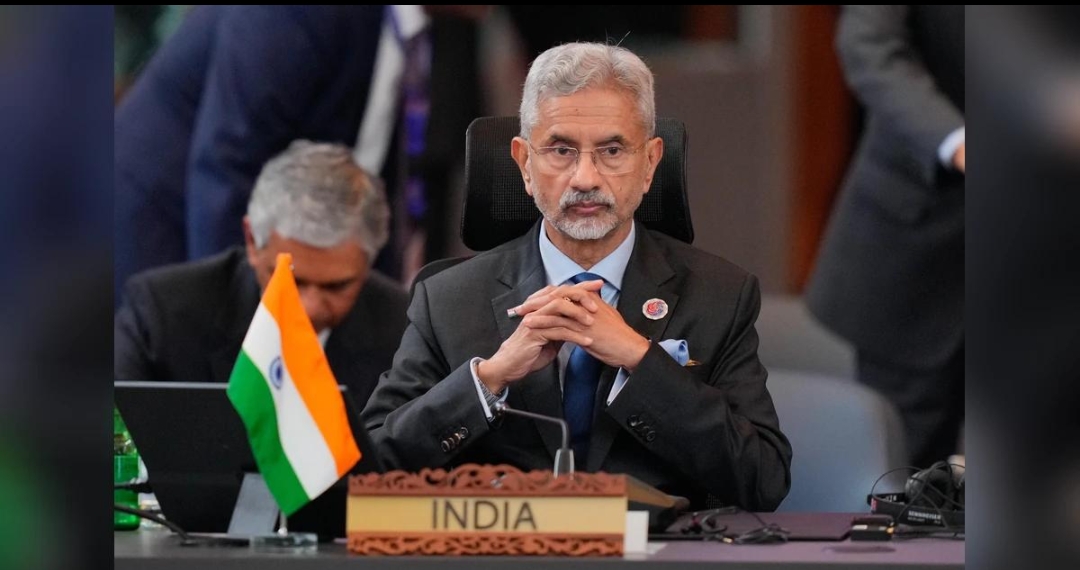
New York, September 26: External Affairs Minister S Jaishankar highlighted the opportunities and security risks associated with artificial intelligence (AI) in the maritime domain during the 81st session of the United Nations General Assembly (UNGA) and welcomed the launch of India-Gulf Cooperation Council (GCC) Free Trade Agreement (FTA) negotiations.
Jaishankar co-chaired an event on “AI in the Context of International Peace & Security, with an Emphasis on Maritime Security” along with Greek Foreign Minister George Gerapetritis.
He said AI could support maritime domain awareness, search and rescue operations, disaster response, detection of suspicious activity, and the resilience of ports and critical infrastructure. At the same time, he noted that AI could be used for reconnaissance, vulnerability mapping and cyber operations targeting vessels, communication networks and undersea infrastructure.
Jaishankar said increasing autonomy in maritime systems raises questions related to attribution, accountability and escalation, while reducing the time available for decision-making. He stressed that the UN Charter and international law, including the law of the sea, remain key frameworks for regulating state conduct.
He called for greater transparency, confidence-building measures, capacity development, technical cooperation and the exchange of best practices to ensure that AI is developed and used in line with international principles.
Jaishankar said the New Delhi Declaration emphasises democratic access to AI resources, development of secure and trustworthy systems, investment in human capabilities and the use of AI for economic growth and social welfare.
In a separate engagement, Jaishankar co-chaired the India-GCC Troika Ministerial Meeting in New York. The meeting reviewed progress under the India-GCC Joint Action Plan 2024–28 and discussed measures to further strengthen cooperation.
Jaishankar welcomed the launch of India-GCC FTA negotiations and said India looked forward to expanding cooperation in trade, investment, energy, food security, health, new technologies, culture and people-to-people exchanges. He also acknowledged the support extended by GCC countries to the Indian community.
He reiterated India’s commitment to freedom of navigation and the safety of seafarers and commercial shipping.
Earlier, Jaishankar signed the United Nations Convention against Cybercrime on the sidelines of UNGA81, saying the convention would strengthen international cooperation for a safer digital environment.
Jaishankar also met Russian Foreign Minister Sergey Lavrov during the UN General Assembly. The two sides discussed ongoing international issues and reviewed India-Russia bilateral relations and cooperation under BRICS.