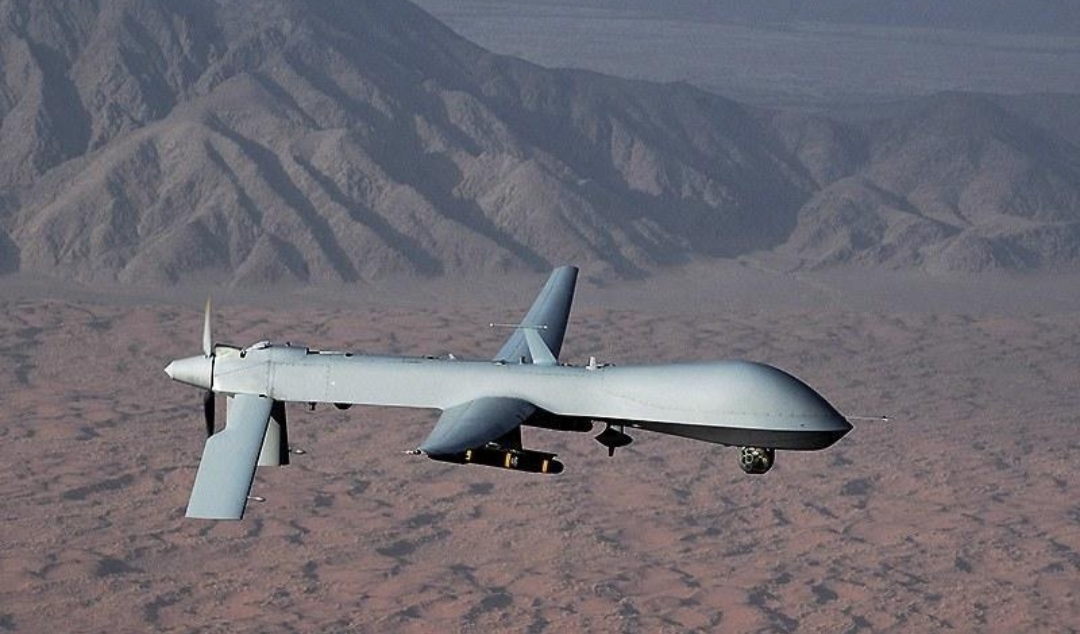
Washington, June 1: The United States Central Command (CENTCOM) said on Sunday that it carried out self-defence strikes on Iranian radar installations and drone command-and-control facilities in southern Iran over the weekend, following what it described as “aggressive Iranian actions.”
According to CENTCOM, the strikes targeted radar and drone control sites in Goruk and on Qeshm Island after Iran allegedly shot down a US MQ-1 drone operating over international waters. The military action was conducted on Saturday and Sunday and was aimed at neutralising threats posed to regional maritime security.
CENTCOM stated that US fighter aircraft responded swiftly to the incident, destroying Iranian air defence systems, a ground control station, and two one-way attack drones that were deemed a threat to vessels transiting the region.
Describing the operation as “measured and deliberate,” the command emphasised that the strikes were carried out in self-defence and were intended to protect US personnel, assets and interests.”No American service members were harmed,” CENTCOM said, adding that it would continue to safeguard US interests in response to what it termed as unwarranted Iranian aggression during the ongoing ceasefire period.
Meanwhile, Iran’s Islamic Revolutionary Guard Corps (IRGC) claimed that its air defence units had successfully shot down a US MQ-1 drone after it allegedly entered Iranian airspace early Sunday. According to Iran’s semi-official Tasnim News Agency, the drone was detected by surveillance systems and targeted with advanced air defence missiles.
The IRGC alleged that the aircraft belonged to the US military and accused it of entering Iranian territory with the intention of conducting hostile operations.
The developments come amid continued diplomatic efforts between Washington and Tehran over a proposed agreement aimed at extending the current ceasefire and reviving negotiations on Iran’s nuclear programme.
According to reports, the latest draft under discussion includes a 60-day cessation of hostilities, measures to ensure the reopening of the Strait of Hormuz, and a framework for resuming nuclear talks. However, no formal agreement has yet been announced.
US President Donald Trump has reportedly sought additional revisions to the proposed deal. Speaking in an interview with Fox News, Trump reiterated that preventing Iran from acquiring nuclear weapons remains a non-negotiable condition.”The one guarantee that I have to have is that there will be no nuclear weapons,” Trump said, while adding that he was in “no hurry” to finalise an agreement.
Iranian officials, however, have maintained that any agreement must fully safeguard the country’s interests. Parliament Speaker Mohammad Bagher Ghalibaf stated that Tehran would reject any deal lacking sufficient guarantees, while Foreign Minister Abbas Araghchi cautioned against speculation, saying negotiations were still ongoing and no final agreement had been reached.
Iranian media reported that diplomatic discussions continue, with both sides proposing amendments as efforts to reach a mutually acceptable settlement remain underway.