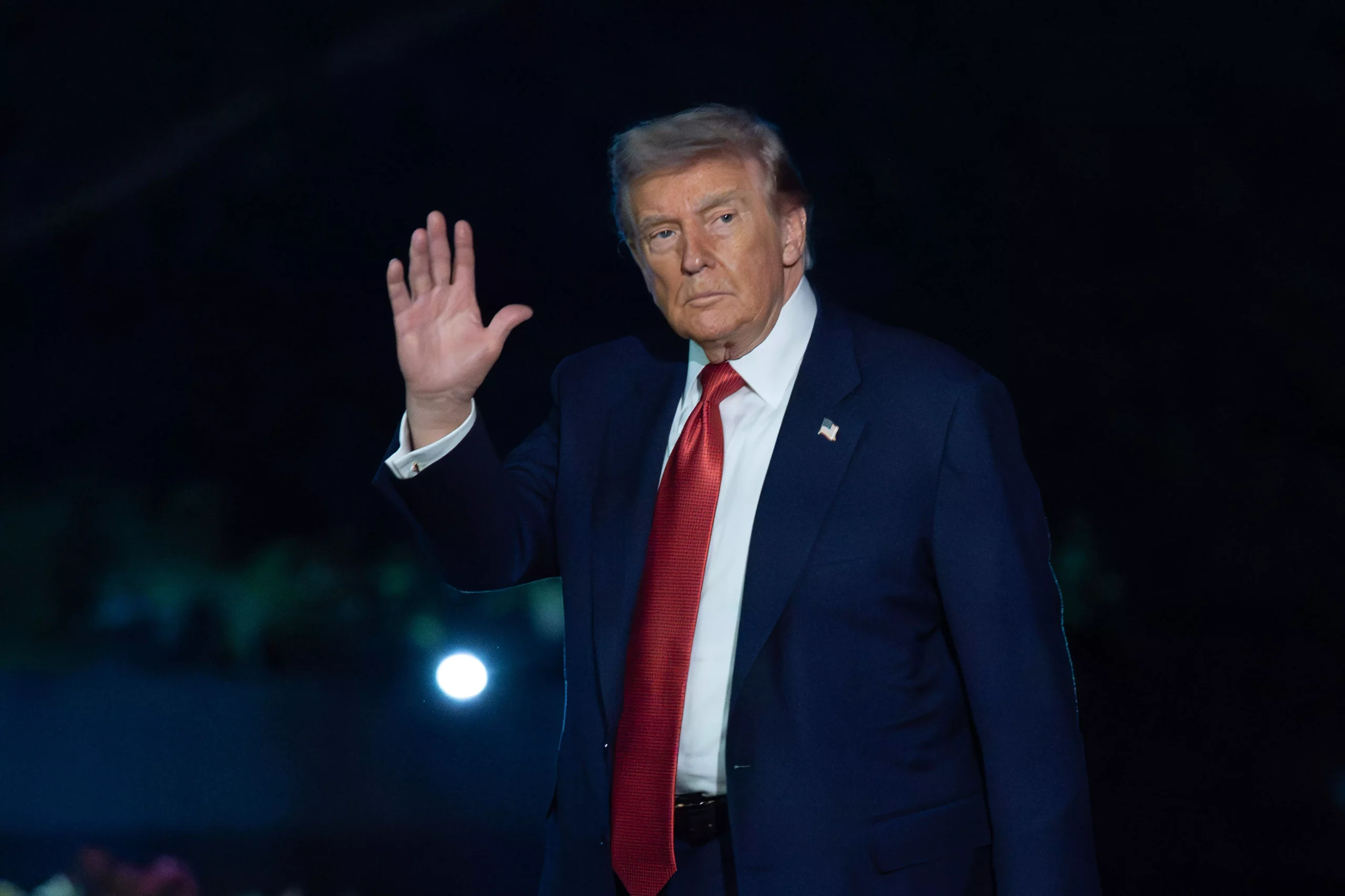


Washington, June 6: US President Donald Trump has claimed that Iran’s missile capabilities have been significantly weakened following recent military strikes, asserting that Tehran now retains only a small fraction of its original arsenal.
Speaking during an interview with NBC News’ Meet the Press, Trump said the United States had inflicted severe damage on Iran’s military infrastructure.”I would say, percentage-wise, maybe 21 or 22 per cent of their missiles,” Trump said, adding that while Iran still possesses a considerable number of missiles, its stockpile is substantially smaller than before the attacks.
However, Trump’s assessment differs sharply from intelligence reportedly shared with US lawmakers. According to a report by The New York Times, congressional briefings last month indicated that Iran had restored operational control over 30 of its 33 missile sites located along the strategically important Strait of Hormuz. The briefings also suggested that Tehran still possesses nearly 70 per cent of its pre-conflict missile inventory.
Addressing concerns over maritime security in the Strait of Hormuz, a crucial route for global energy supplies, Trump expressed confidence that disruptions would soon come to an end. While declining to disclose the number of commercial oil tankers escorted by US forces through the waterway, he stated that “a lot” had been safely guided through the region.”It shouldn’t take long. One way or the other, it’s going to get done,” Trump said, predicting that oil prices could eventually fall below previous levels once tensions ease.The remarks come amid growing domestic political pressure over rising fuel prices in the United States ahead of the upcoming midterm elections.
On Iran’s nuclear programme, Trump reiterated Washington’s longstanding position, insisting that Tehran would not be allowed to develop nuclear weapons.”We’re having great success. They’re not going to have a nuclear weapon. They’re in no position to have a nuclear weapon,” he said.Iran has consistently denied allegations that it is pursuing a nuclear weapons programme, maintaining that its nuclear activities are solely for peaceful purposes.
Meanwhile, Lebanese President Joseph Aoun strongly criticised Iran’s influence in Lebanon and called on the Iran-backed Hezbollah movement to pursue diplomacy rather than continued confrontation with Israel.In an interview aired by CNN, Aoun accused Tehran of interfering in Lebanon’s internal affairs and using the country as leverage in its negotiations with Washington.”They are using Lebanon as a bargaining chip in their negotiation with the United States. It’s unacceptable,” Aoun said.
His remarks come amid escalating tensions between Hezbollah and Israel following renewed cross-border hostilities. The latest violence intensified after a rocket barrage launched by Hezbollah into Israel on March 2, which the group described as retaliation for the assassination of Iran’s Supreme Leader during joint US-Israeli operations. Israel subsequently responded with extensive airstrikes and ground operations in southern Lebanon.
Aoun stressed that dialogue remains the only viable path to ending the conflict.”Hezbollah must understand that there is no other way but to sit and talk. Negotiation and diplomacy are the only means to solve this problem and save what remains,” he said.
The Lebanese President also emphasised that the future of Hezbollah’s weapons should be addressed through Lebanese state institutions and linked any long-term solution to a complete Israeli withdrawal from disputed areas and an end to border clashes.
His comments follow a ceasefire framework brokered in Washington earlier this week between Israeli and Lebanese representatives. The agreement is contingent upon a complete halt to hostile actions by Hezbollah, although it does not require an immediate cessation of Israeli military operations.
Despite the fragile nature of the truce, Aoun expressed optimism, describing it as a significant opportunity to end decades of hostility between Lebanon and Israel.”Israel can flatten the whole country, but they will never be able to achieve their objective,” Aoun said, arguing that military force alone cannot resolve the conflict.
Hezbollah remains the only armed group allowed to retain its weapons following the end of Lebanon’s 1975-1990 civil war, maintaining that its arsenal serves as a deterrent against Israeli military activity along the southern border.