What the evidence can show
Can a 12-year-old be prescribed a birth control pill? Yes, hormonal treatment may be considered for menstrual problems after individual medical assessment. But that does not establish a worldwide trend. The research reviewed for this article does not demonstrate a worldwide or Asia-wide increase in pill use among 12-year-olds between 2023 and 2026.
A study published in 2024 by researchers at UiT, the Arctic University of Norway, examined prescription records across three historical birth cohorts. For girls born in 1994-1995 and 1999-2000, its table recorded cumulative initiation of hormonal contraception at age 12 as 0.1% in each group - approximately one in 1,000. [1]
That statistic included hormonal methods beyond the pill. It describes historical Norwegian cohorts, not today's worldwide rate. A filled prescription also does not establish why the medicine was used or whether it was taken.
To test a claim of a recent increase, researchers need comparable information about the same age group, the same medicine and the same measure of use across the years being compared. The studies reviewed here cannot supply that comparison for 12-year-olds worldwide.
A study of older teenagers cannot answer an age-12 question.
What research in Asia actually measures
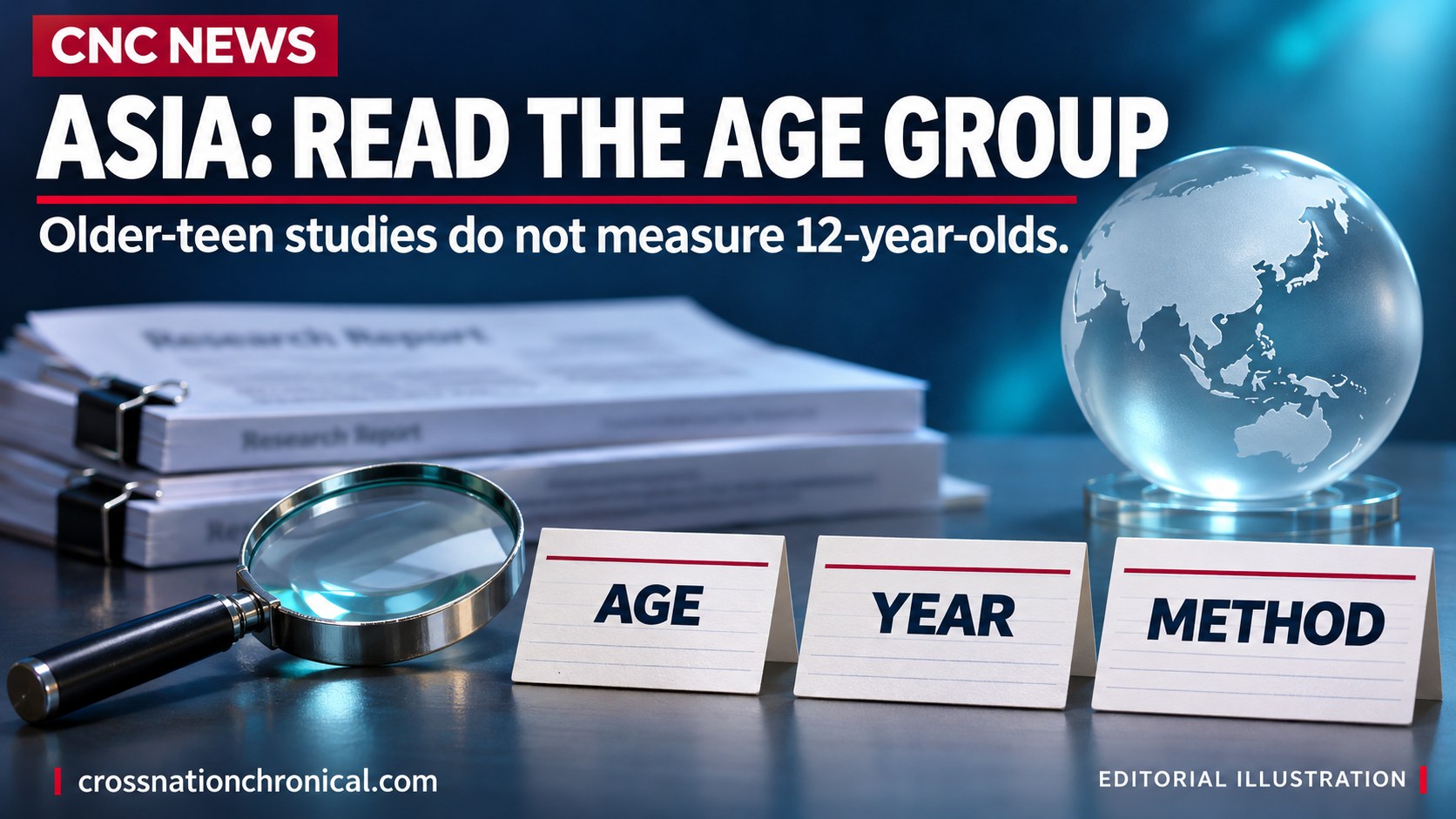
A paper published in February 2026 in Discover Public Health examined married adolescents aged 15-19 in India. Its historical survey comparison reported pill use of 3.90% in 2015-2016 and 4.85% in 2019-2021. These are figures for a specific group of older teenagers, collected years before the paper was published. [2]
The findings do not measure 12-year-olds, all Indian girls or a change between 2023 and 2026. A publication dated 2026 is not automatically a survey conducted in 2026, and a result from one country cannot represent all of Asia.
UNICEF's reporting on adolescent access to family planning also focuses on ages 15-19. It identifies barriers such as cost, stigma and lack of accurate information. Its measure covers modern contraceptive methods generally, rather than pill use alone. [3]
These findings deserve attention for what they reveal about access to care. They should not be presented as proof that increasing numbers of 12-year-olds across Asia are taking the pill. Before sharing a percentage, check who was counted, when the data was collected and which treatment or behaviour was measured.
Read the age group, data year and method before sharing a number.
Why the pill can also be medicine
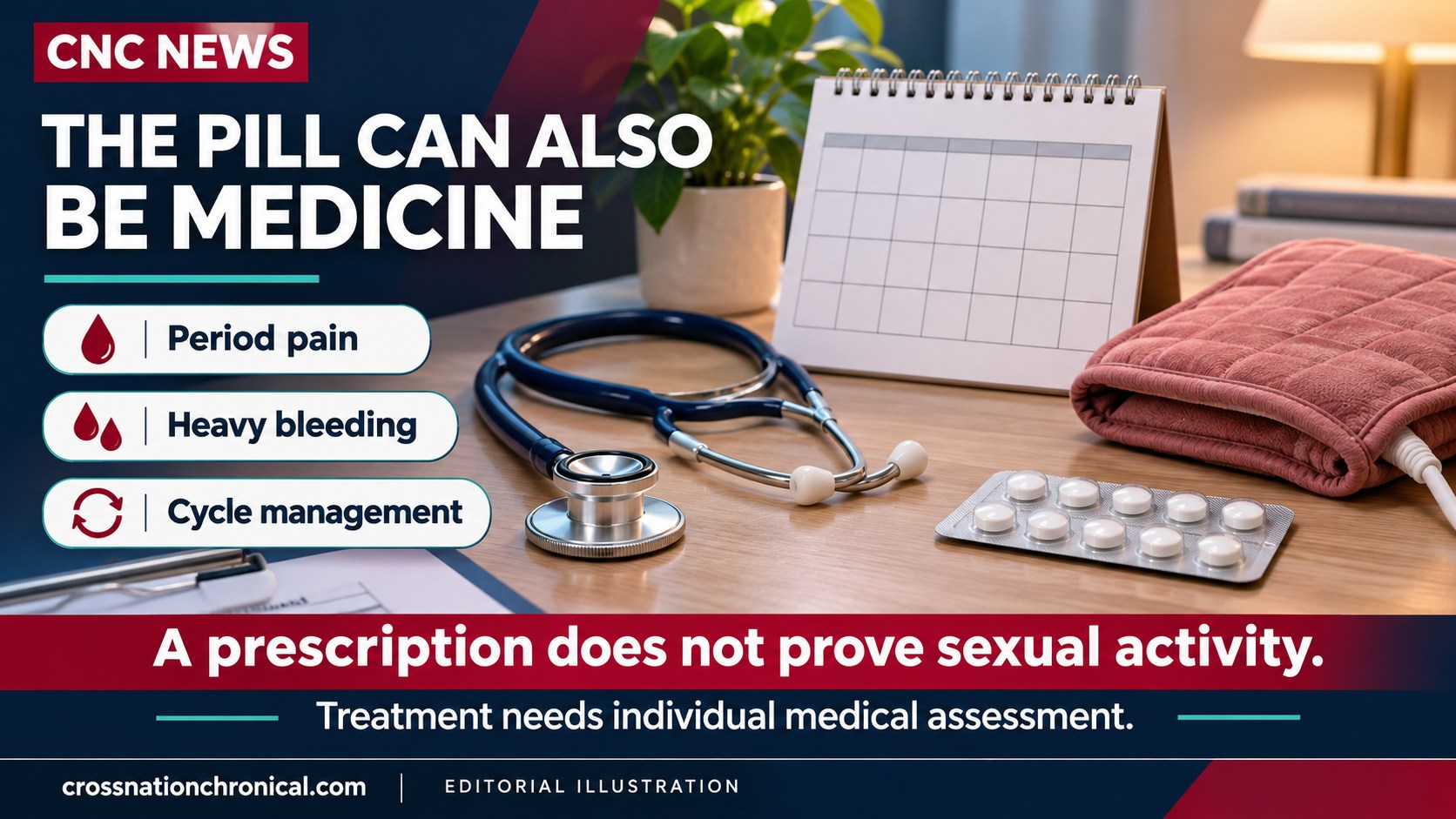
The name 'birth control pill' describes one use of a medicine, but hormones can also be used to manage menstrual symptoms. American Academy of Pediatrics guidance explains that oral contraceptives may help regulate cycles, reduce heavy bleeding and relieve cramps, depending on the underlying problem. [4]
The North American Society for Pediatric and Adolescent Gynecology also notes that many teenagers use hormonal medicines for cramps despite having no need for contraception. A prescription alone therefore does not reveal whether a child is sexually active. [5]
Treatment is not the same for every young person. A clinician should assess symptoms, medical history, treatment preferences, potential benefits, contraindications and side effects. Hormonal pills are one option; they are not automatically the right treatment for every child. [6]
Pediatrician Dr. Kerry Gannon-Loew advises families to seek care when period symptoms interfere with daily life or cause missed school. Heavy bleeding or persistent pain deserves evaluation. Families can ask what the medicine is treating, what alternatives exist and when follow-up is needed. [4]
Children deserve accurate information, privacy and respectful care. The useful response to a prescription is to understand its medical purpose, rather than make assumptions about the child.
A prescription does not prove sexual activity. Understand the reason for treatment.
Sources and further reading
Sources checked November 28, 2026.
- [1] Saebo and Skjeldestad, Acta Obstetricia et Gynecologica Scandinavica (2024), Table 2
- [2] Naik and colleagues, Discover Public Health (2026), Table 2
- [3] UNICEF Data, Gender equality: Sexual and reproductive health
- [4] American Academy of Pediatrics, Menstrual Disorders in Teens (updated January 2026)
- [5] NASPAG, Painful Periods (Dysmenorrhea)
- [6] ACOG Committee Opinion No. 760: Dysmenorrhea and Endometriosis in the Adolescent
General health information. Individual treatment requires clinical assessment.