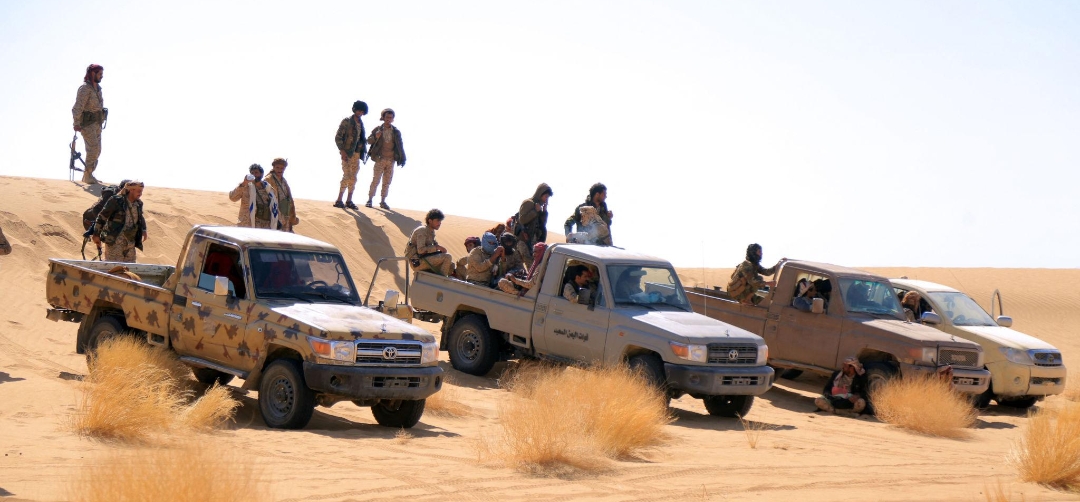


Marib, Yemen, September 14: Fighting in Yemen has intensified as Houthi forces advance towards areas held by the Saudi-backed Yemeni government, including the oil- and gas-producing province of Marib and the city of Taiz, raising concerns over a renewed offensive.
Marib has remained a key government-held area since the conflict escalated in 2015. The province hosts military bases, oil and gas facilities, a power station and more than two million displaced people.
Reports indicate that the Houthis have been deploying fighters and military equipment in areas of Marib province under their control. Yemeni government forces have said they are prepared to defend the province against any attempt to advance.
Brigadier Yahya Al-Hatemi, director of the Yemeni army’s military media, told Arab News that government forces had gained battlefield experience during more than a decade of fighting and were prepared to defend Marib.
He said the armed forces had become more organised and effective and had developed experience in military tactics and battlefield operations.
Yemeni media reports said the reported Houthi buildup around Marib could indicate preparations for another offensive. The developments came after Houthi forces made gains along Yemen’s western coast, including the reported capture of Mokha and advances towards the Bab Al-Mandab area.
Al-Hatemi said the government forces were aware that Marib could be the Houthis’ next target. He also said the province had military capabilities and local support to resist an advance.
The developments have also increased pressure on Saudi Arabia. According to CNN, the Houthi advances and attacks have left Riyadh with limited options, as any military response could carry wider regional consequences.
Experts cited by CNN said Saudi Arabia was seeking to avoid an all-out war, while the Houthis’ actions could increase the possibility of further Saudi military intervention. Yemen expert and Washington-based risk adviser Mohammed Al-Basha said the possibility of a large-scale Saudi response was increasing.
The situation is also linked to the wider confrontation involving Iran and the United States, particularly around commercial shipping through the Strait of Hormuz.
US Central Command said on Sunday that the US Navy had redirected 101 commercial vessels in the strait. The United States reinstated its blockade on Iranian ports in July following the breakdown of talks between Washington and Tehran.
During his two-day visit to Ireland on September 12, US President Donald Trump said Iran was likely involved in the wider developments and said the Houthis had contacted Washington to indicate that they did not want a confrontation with the United States.
Trump also said most commercial vessels were continuing to pass through the Strait of Hormuz, while the United States was taking action against vessels it considered a concern. He said US naval operations in the area had helped prevent a further increase in oil prices.
Preliminary ship-tracking data cited by Al Arabiya English showed that vessel traffic through the Strait of Hormuz fell to seven on September 10 from 12 the previous day, below the 10-day average of 14.
The developments in Yemen and the Strait of Hormuz have increased concerns that renewed Houthi advances or attacks could draw Saudi Arabia and other regional powers further into the wider conflict involving Iran and the United States.