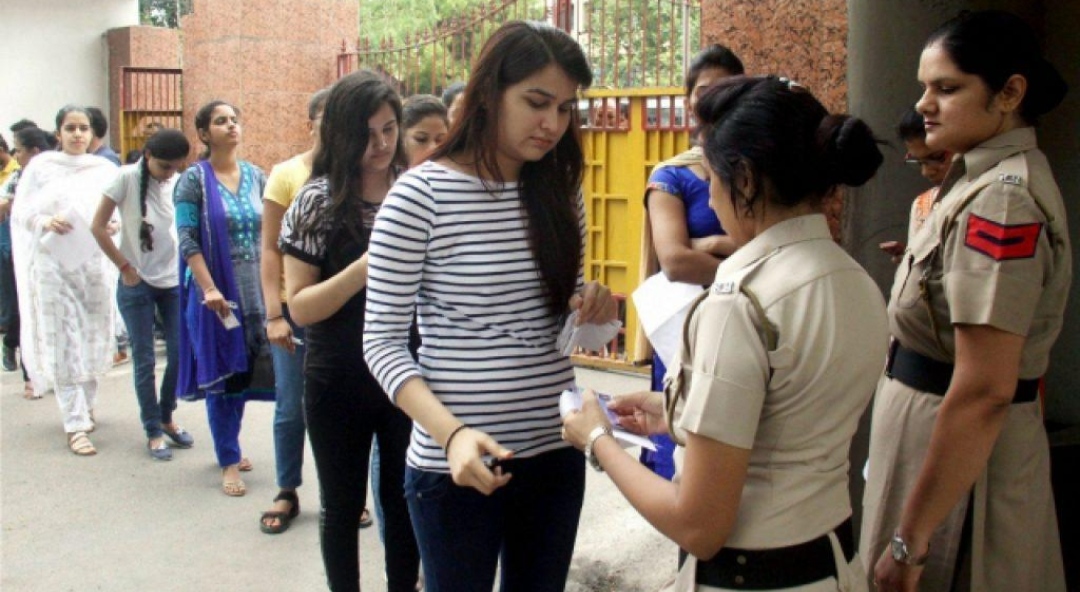


New Delhi, June 4: In a major technological initiative aimed at enhancing the integrity and transparency of the civil services examination process, the Union Public Service Commission (UPSC) has successfully implemented a real-time face authentication protocol in the Civil Services Examination (CSE) and Indian Forest Service (IFS) Preliminary Examination 2026.
The newly introduced system was deployed across all 2,072 examination centres nationwide and was designed to verify that the candidate appearing for the examination was the same individual who had uploaded their photograph during the application process. The move is intended to eliminate impersonation and other forms of examination malpractice.
According to UPSC, the authentication process enabled live verification of candidates at examination venues through a mobile-phone-based application operated by invigilators. The technology ensured seamless identification while maintaining smooth entry procedures at examination centres.
The face authentication application was developed by UPSC with technical support from the National e-Governance Division (NeGD) under the Ministry of Electronics and Information Technology (MeitY). As part of the new protocol, every candidate was required to undergo face authentication before being granted entry into the examination hall.
To facilitate implementation, UPSC formulated a comprehensive Standard Operating Procedure (SOP), which was shared with state administrations, district authorities and examination venues across the country. Multiple training sessions were also conducted for invigilators to ensure efficient execution of the system.
A notable feature of the solution is its cost-effectiveness. UPSC stated that the application functions on any Android smartphone, allowing invigilators to use their own devices without the need for expensive hardware infrastructure. This significantly reduced logistical challenges and implementation costs.
The commission further highlighted the speed and scalability of the technology. Each face authentication process took only six to eight seconds, ensuring smooth candidate entry and preventing long queues at examination centres. During peak hours, the system processed nearly 12,000 authentications per minute and supported simultaneous usage by over 7,000 invigilators.
UPSC Chairman Ajay Kumar described the initiative as an important step toward conducting impersonation-free examinations. He noted that while the technology was developed in-house with the support of NeGD, the greater challenge lay in deploying it effectively on a large scale, training personnel and ensuring smooth implementation within a limited timeframe.“This is a new step taken by UPSC to ensure impersonation-free exams.
UPSC, NeGD and MeitY teams have successfully developed and implemented this solution at a massive scale, covering nearly 5.5 lakh candidates across more than 2,000 examination venues,” Kumar said.
The successful deployment of real-time face authentication marks a significant advancement in the use of technology for public examinations and reflects UPSC’s continued commitment to ensuring fairness, transparency and credibility in the recruitment process.