

New Delhi, India May 17: India’s merchandise trade deficit is expected to remain under pressure in the coming months as higher crude prices, ongoing supply-side disruptions and a potential slowdown in global demand weigh on export performance, according to a report by Nuvama Institutional Equities.
The brokerage noted that while a weaker rupee could lend some competitiveness to Indian exports, the recent increase in bullion import duty may be one of the few near-term measures to ease the overall deficit.
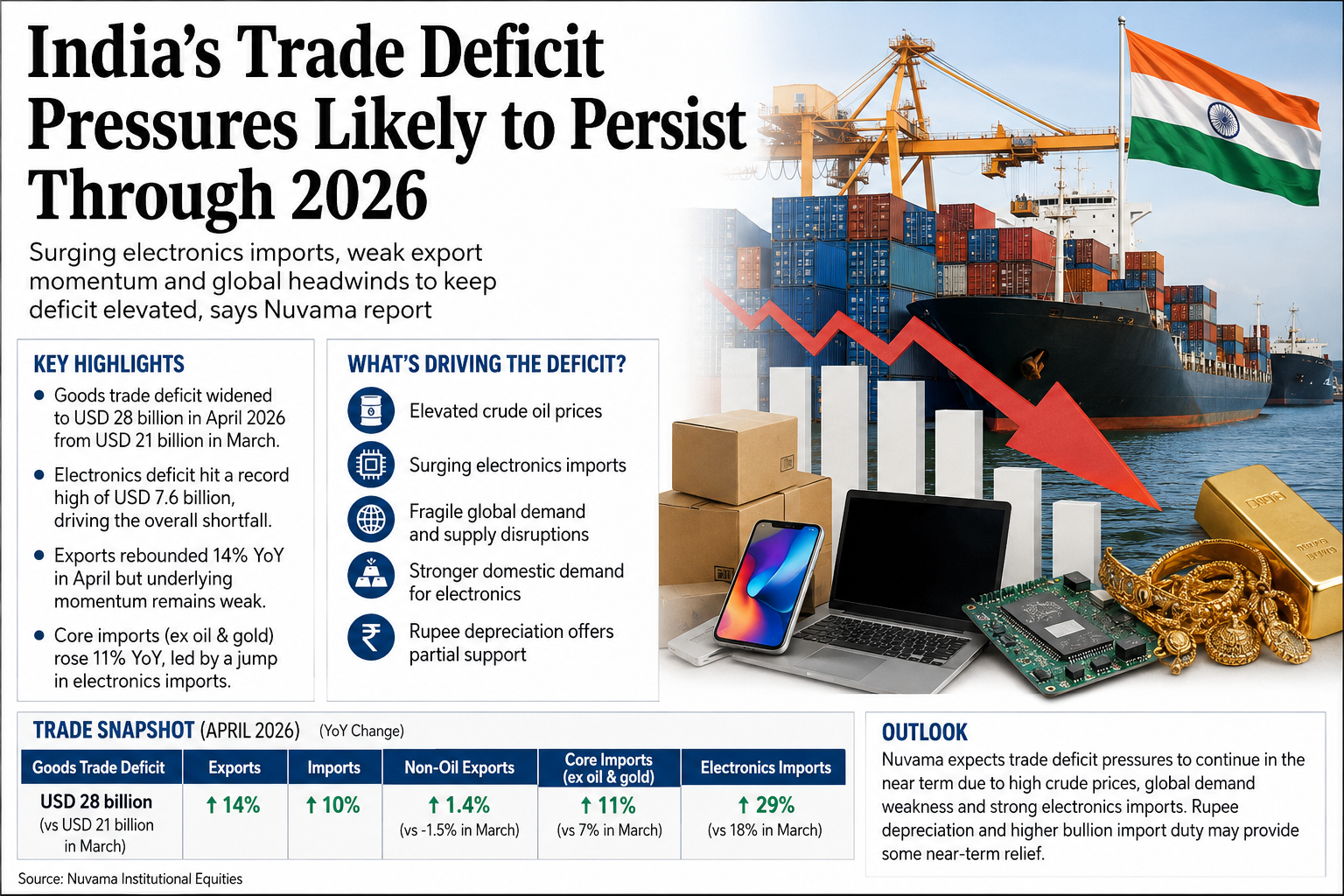
India’s goods trade deficit widened sharply to USD 28 billion in April 2026 from USD 21 billion in March. Both oil and gold deficits climbed by around USD 2 billion each, reflecting continued external sector imbalances. The core deficit excluding oil and gold also deteriorated significantly to USD 13 billion from USD 9 billion, led by larger shortfalls in chemicals, electronics, ores and agricultural products.
Electronics imports emerged as a key contributor to the widening gap, with the deficit in this segment rising by USD 0.7 billion to an all-time high of USD 7.6 billion, the report said.
On the export side, overall goods exports recorded a 14 per cent year-on-year increase in April, reversing a 7.4 per cent contraction in March. Trend export growth improved to 1.6 per cent from -2.8 per cent, but Nuvama described underlying momentum as “still subdued”.
Non-oil exports showed a modest recovery, rising 1.4 per cent year-on-year in April compared with a 1.5 per cent decline in March, underpinned by a sharp uptick in electronics shipments, which jumped to 13 per cent from 1 per cent. However, labour-intensive exports continued to contract on a trend basis, falling 9 per cent.
Imports strengthened in April as well, with goods imports rising 10 per cent year-on-year after a 6 per cent decline in March. On a trend basis, import growth eased to 9 per cent from 12 per cent, supported by a significant moderation in gold imports which slowed to 63 per cent from 138 per cent. Oil imports continued to decline, contracting 15 per cent year-on-year.
Core imports, excluding oil and gold, accelerated to 11 per cent from 7 per cent, driven largely by a surge in electronics imports to 29 per cent from 18 per cent. In contrast, machinery imports often seen as a barometer of capital expenditure slowed to 13 per cent from 19 per cent on a trend basis.
Nuvama cautioned that export prospects remain uncertain amid ongoing supply disruptions and elevated crude prices. “Any slowdown in global demand poses additional downside risks,” the report said.
The brokerage highlighted that while currency depreciation may provide some support by enhancing export competitiveness in the near to medium term, higher bullion duty could help curb gold import bills and offer limited relief to the overall trade balance.
It added that the widening of the headline deficit primarily reflects robust domestic demand for electronics and relatively weak external demand for labour-intensive goods.